


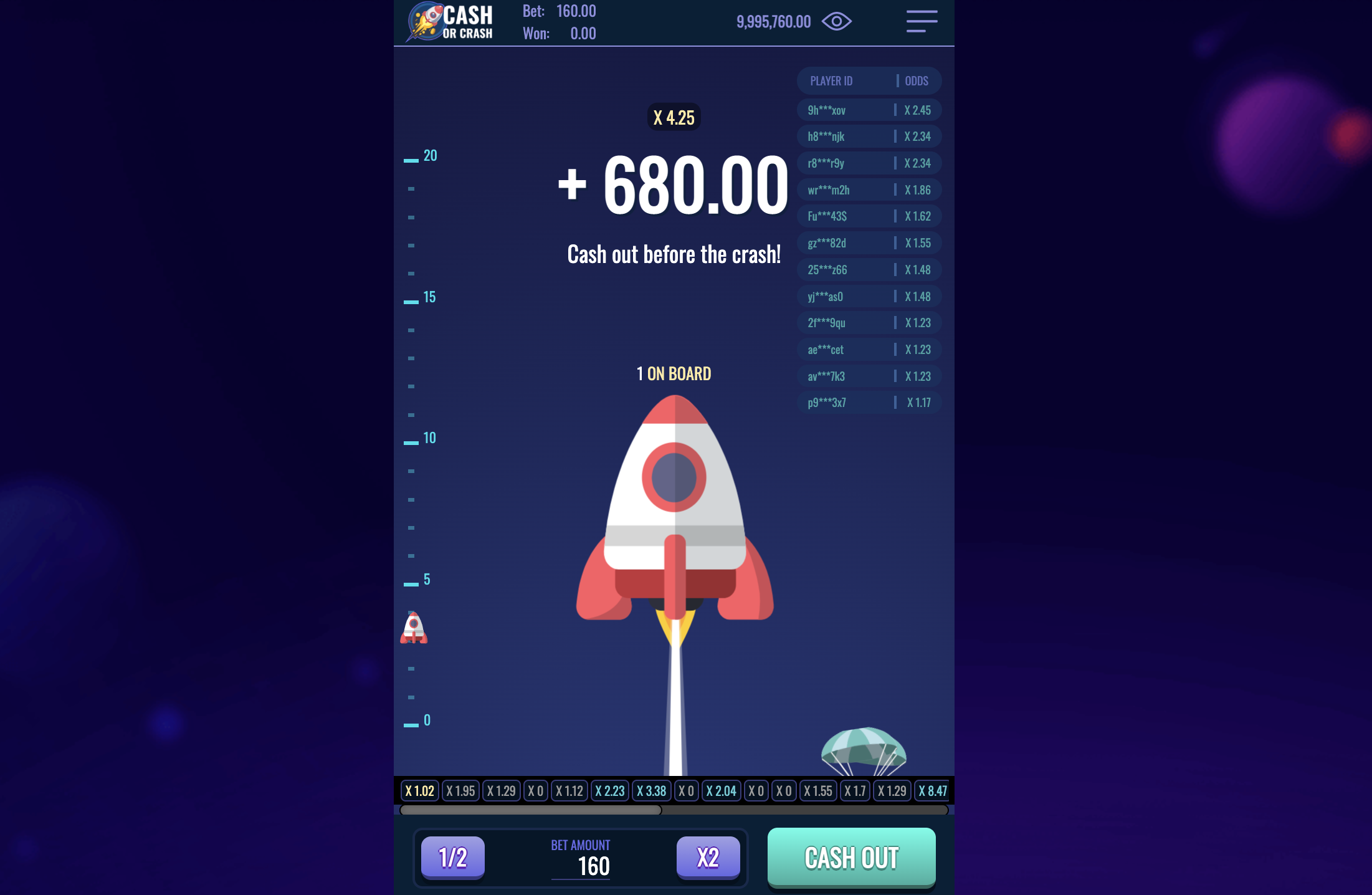
When we analyze the inner workings of live game shows like Cash or Crash Live, we discover features created to offer players a semblance of influence within a high-risk environment. The Block tool shines as one of the most key tactical tools available to UK players. Different from the central game of luck, where a unpredictable multiplier can collapse at any moment, the Block permits a participant to preemptively ‘lock in’ a share of what they could win before the certain crash occurs. It changes a completely spectator session into a more involved, choice-driven one. We view its use as a vital risk-control strategy, distinguishing casual play from more thoughtful approaches. For the UK audience, where gaming is often perceived through a prism of both fun and clever engagement, learning to use this feature is essential to dealing with the game’s built-in tension between avarice and protection.
Frequent Blocking Mistakes to Avoid
Through our analysis of gameplay, we’ve noted several typical pitfalls UK players should be mindful of when using the Block. The most frequent mistake is blocking out of fear at the first indication of a rising multiplier, often at a figure so low it barely pays for the initial stake. This negates the function’s purpose of securing substantial profit. Conversely, greed results in the fault of never blocking at all, treating every round as an all-or-nothing gamble, which statistically eliminates gains over time. Another nuanced error is positioning the block at a round, psychologically important number like 5.0x, which many other players are also apt to use. If a cash or crash live free spin winnings is engineered to frequently occur just below such typical thresholds, this strategy can misfire. We suggest players to vary their block points and ground them on a pre-defined strategy rather than emotional impulses during the midst of the round.
The way UK Regulations Shape Feature Application


The employment of functions like the Block does not happen in isolation; it is defined by the UK’s stringent gambling rules and responsible gaming environment. The UK Gambling Commission mandates that games offer transparent information and features that encourage player control. The Block function aligns perfectly with this philosophy, as it is a practical tool for risk management and reducing losses. Moreover, the abundance of detailed game data and history, which UK-licensed operators must provide, directly contributes to Block strategy. Players can review past rounds to inform their timing, incorporating analytical strategy. It is also noted that the UK industry’s focus on transparency implies the workings of the Block are clearly described, preventing misunderstanding. This regulatory context promotes a more deliberate, analytical approach to the experience, where the Block is regarded not just as a button, but as a central component of informed play.
Exactly what the Block Function In Reality Does
Fundamentally, the Block function in Cash or Crash Live is a basic but effective protective feature. As a round progresses, as the multiplier increases, a user can press the Block button to guarantee a slice of their possible payout. This action creates a guaranteed floor for that round’s payout. If the round crashes at a value below where they placed their block, they still receive the blocked amount. If the game soars past the block level, their possible payout rises further, but the blocked sum is safe. It’s crucial to understand that employing the Block does not conclude your play during that round; your current multiplier stays in play, yet you’ve got a safety cushion. We consider this two-state gameplay—being both safe and still in the game—as the feature’s mental appeal. For UK players, it directly addresses the age-old problem of knowing when to take money off the table, an idea well-known from everything from the stock market to a tense round of a pub quiz.
Tactical Timing for UK Players
Tactical use of the Block is all about pacing, and UK players commonly form strategies derived from noted game tendencies and own risk tolerance. There is no universally optimal time, making it a subject of much discussion. Some advocate for an early block, perhaps at a small 1.5x or 2x multiplier, to ensure a tiny but consistent gain, growing a capital slowly and safely. Others, pursuing larger profits, will let the multiplier climb significantly higher before activating their block. We find that many experienced players in the UK use a mixed strategy, modifying their block point depending on the behavior of recent rounds. As an illustration, following several in a row low multiplier crashes, some could activate their block sooner, predicting a pattern. Conversely, after a large multiplier, the next round might see users delaying their block, anticipating it happening again. The crucial point is that the decision is dynamic and situational, moving the player from a passive observer to an engaged participant, managing their own risk.
Emotional Influence on Play
The implementation of the Block option fundamentally alters the emotional state of Cash or Crash Live. In its absence, the game is a straightforward challenge of nerves, a all-or-nothing “cash out or bust” outcome that commonly causes regret—either from exiting prematurely or busting out. The Block addresses this by furnishing a third, soothing choice. This feature alleviates the anxiety of losing everything, which in turn can lead to calmer and more gainful decisions. We observe that UK players using the Block frequently describe feeling more empowered, which enhances their enjoyment and engagement with the game. Nevertheless, it also creates new forms of psychological tension, for example the vexation of blocking at 3x just to observe the multiplier climb to 10x. This “fear of missing out” (FOMO) is a potent factor, and learning to manage the emotional response to a successful or poorly timed block is equally crucial as mastering the timing.
Contrasting Block to Auto-Cash-Out

It’s vital to distinguish the Block function from the individual Auto-Cash-Out feature, as UK players at times conflate the two. Auto-Cash-Out is a set-and-forget tool where you predetermine a multiplier at which your entire bet is instantly cashed out, ending your engagement in that round entirely. The Block function is more nuanced. It does not end your round; it merely secures a portion of your winnings while your live bet continues to ride. This means you can still profit from a climbing multiplier after blocking, which is impossible with Auto-Cash-Out. We see Auto-Cash-Out as a tool for control, imposing a rigid profit target. The Block, though, is a tool for risk management and opportunity optimisation. A experienced UK player might use both in conjunction—for instance, configuring a conservative Auto-Cash-Out at 10x but using a manual Block at 4x to guarantee a base profit well before that target.
Developing a Personal Block Approach
Creating a steady individual strategy for the Block is the trademark of a careful Cash or Crash Live player in the UK. We advise starting with a bankroll strategy plan: decide what fraction of your session stake you are prepared to risk per round and what constitutes a achievable profit target. Your Block plan should meet these targets. One technique is the “tiered block,” where you block a modest percentage of your potential winnings at a low multiplier, another portion at a medium multiplier, and let the rest ride. Another is the “fixed profit” approach, where you compute the exact multiplier needed to secure a particular profit and stop there every time, ignoring the allure of higher multipliers. Crucially, any plan must be recorded and adhered to before you begin playing, as in-play emotions will obscure reasoning. The Block is a strong tool, but its power is only realized through systematic, pre-planned execution.